impact
social outcomes
- Our tool provides stakeholders with a new perspective on predicting infectious disease outbreaks related to extreme climate variations.
- Enables proactive planning, targeted interventions, efficient resource allocation, and response strategies.

audience
target beneficiaries
- Health professionals and local communities affected by malaria outbreaks such as communities in Vhembe in South Africa.
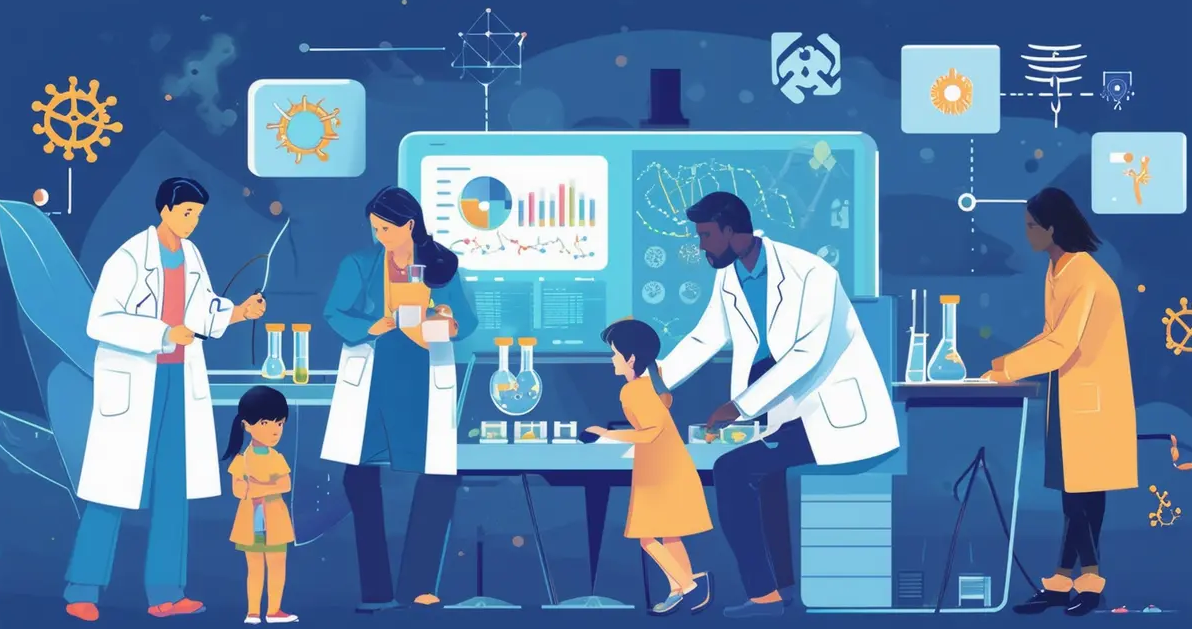
Our intelligent tool, MOEWS, can be used to forecast malaria outbreaks and disseminate malaria outbreaks alerts in Vhembe, located in the Limpopo province of South Africa. Additionally, this tool can be customized for malaria prediction across Sub-Saharan Africa, where malaria outbreaks are prevalent. By incorporating indigenous knowledge, MOEWS ensures contextual relevance throughout Sub-Saharan Africa.
Our research project represents a pioneering approach to infectious disease prediction. By merging Indigenous Knowledge Systems with machine learning, the study not only contributes to an intelligent early warning system but also bridges the gap between traditional wisdom and modern technology. The findings underscore the significance of proactive planning, targeted interventions, and resource efficiency in combatting malaria outbreaks. Our work represents a significant advancement in predictive modelling for infectious diseases, particularly malaria, in Africa, demonstrating the potential of collaborative efforts between traditional knowledge and modern technologies.
long term
Future Direction of the project
Integration with National Health Systems: Explore collaborations with national health systems and agencies to integrate the MOEWS platform into existing healthcare infrastructure. Work towards standardization and interoperability to ensure seamless data exchange between MOEWS and health information systems.
Scale-Up and Expansion: Develop a roadmap for scaling up the MOEWS project to cover additional regions beyond Vhembe. Collaborate with governmental and non-governmental organizations for broader implementation and impact.
Enhanced Machine Learning Models: Continuously refine and improve machine learning models used in the MOEWS system. Consider exploring advanced algorithms to enhance prediction accuracy. Incorporate more data feeds and adaptive learning techniques to make the models more dynamic and responsive to changing conditions.
User Interface and Accessibility: Enhance the user interface of the mobile app and website to ensure user-friendliness. Improve accessibility by accommodating local languages and explore text-to-voice/ voice-to-text features for those who cannot read or write. Additionally, the researchers will consider the development of mobile app versions compatible with different operating systems to increase accessibility.
Community Empowerment and Education: Implement educational programs to increase awareness about malaria, climate change, and the role of MOEWS within local communities. Foster community engagement through workshops, training sessions, and awareness campaigns to empower individuals to take preventive measures.
Long-Term Sustainability: Develop a sustainability plan for the MOEWS project, including funding strategies, capacity building, and community ownership. Explore possibilities for public-private partnerships and collaborations with international organizations to secure long- term support.
Integration of Additional Data Sources: Investigate the inclusion of additional data sources such as satellite imagery, social media data, and environmental sensors to enhance the comprehensiveness of the early warning system.
Continuous Feedback and Improvement: Establish mechanisms for continuous feedback from end-users, health professionals, and stakeholders to identify areas for improvement. Implement an iterative development process to incorporate feedback and enhance the effectiveness of the MOEWS platform over time. Additionally, a remote and unmoderated survey will be distributed to specific ecosystem participants after the deployment of the MOEWS to obtain additional quantitative and qualitative data on attitudes on MOEWS.
Policy Advocacy: Engage in advocacy efforts to influence policy at regional and national levels, promoting the adoption of AI-driven early warning systems for infectious diseases. Collaborate with policymakers to ensure that the insights generated by MOEWS are considered in public health planning and decision-making.
Research and Publications: Encourage and support research initiatives that leverage the data collected by MOEWS for scientific publications and contributions to the field of climate- driven health prediction. Participate in conferences and share findings to contribute to the global knowledge base on the intersection of AI, climate change, indigenous knowledge and public health.